
'It is admitted that the AZ vaccine can, in very rare cases, cause TTS.'
Pharma giant AstraZeneca's Covid-19 vaccine is being withdrawn worldwide after the company acknowledged for the first time in court documents that it can cause a rare and dangerous side effect, according to a report in the British newspaper The Telegraph.
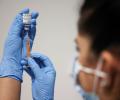
Despite these rare occurrences, the pharmaceutical company maintains that extensive clinical trial data and real-world evidence consistently support the vaccine's safety and efficacy.
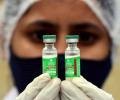
United Kingdom-headquartered pharmaceutical giant AstraZeneca (AZ) has admitted that in 'very rare cases' its Covid vaccine can cause a blood clot related side effect but the causal link is unknown, according to court papers being quoted in the UK media.
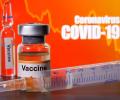
The British-Swedish pharmaceutical major and the UK's medicines regulator said that the vaccines produced by Oxford University in collaboration with AstraZeneca to protect against COVID-19 are safe.
The Medicines and Healthcare Products Regulatory Agency said in its latest Yellow Card monitoring of the coronavirus vaccine programme this week that of the 18.1 million people who had the Oxford vaccine in the UK, 30 people developed blood clots and seven had died as of March 24.
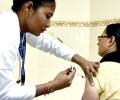
Karnataka Chief Minister Siddaramaiah alleged that the rushed approval and distribution of the COVID-19 vaccine may be a contributing factor to cardiac arrest deaths, citing several international studies that recently suggested a possible link between the vaccines and a rise in heart attacks.
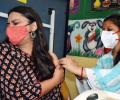
The researchers analysed 2580,021 test results from nose and throat swabs taken from 384,543 participants aged 18 years or older between December 1, 2020 and May 16, 2021.
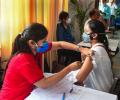
Researchers at Public Health Scotland and the University of Edinburgh, UK, found that the Pfizer-BioNTech vaccine offered better protection against the Delta variant compared to the Oxford-AstraZeneca preventive, known as Covishield in India.
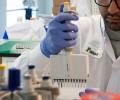
The phase 3 trial is being implemented as part of Operation Warp Speed, a multi-agency collaboration led by the US Health and Human Services, which aims at accelerating the development and manufacturing of medical countermeasures for COVID-19 and delivering 300 million doses of an effective vaccine by January 2021.
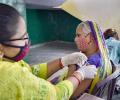
Backing the 12-16 weeks gap between the two doses of Covishield in the country, the chief investigator of the AstraZeneca vaccine clinical trials on Friday said that the level of protection provided by one dose of the preventive significantly increases in the second and third months after the jab.
AstraZeneca and the University of Oxford, as the trial sponsor, said that they cannot disclose further medical information but confirmed that independent investigations concluded that the trials were safe to restart.

The UK's National Health Service was already lining up thousands of medics and volunteers to be ready to deliver jabs up and down the country.

The Oxford vaccine, which also has a tie-up with the Serum Institute of India, was first administered to Brian Pinker, an 82-year-old Oxford-born dialysis patient. Pinker is among the first to be vaccinated by the Oxford University Hospital's (OUH) chief nurse, hailed as a major milestone in the phased vaccination programme being undertaken by the National Health Service (NHS).
AstraZeneca has stressed that patient safety is its "highest priority" and pointed out that regulators around the world "consistently state that the benefits of vaccination outweigh the risks of extremely rare potential side effects".
The institute expects to complete both, phase-2 and 3 trials in India by the end of this year.

'This will not be the last time a virus threatens our lives and our livelihoods'

There is a decisive shift in how cancer may soon be confronted and, hopefully, defeated.
The study also noted that the booster dosage of the company's COVID-19 vaccine Vaxzevria also increased the immune response to Beta, Delta, Alpha and Gamma SARS-CoV-2 variants.
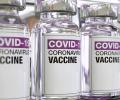
However, in two different dose regimens, the vaccine's efficacy was 90 per cent in one and 62 per cent in the other.

But no extra risk after second dose, shows study led and funded by drug maker, reports Sohini Das.

"I realise that a lot of Indians who have taken Covishield are facing issues with travel to the EU, I assure everyone, I have taken this up at the highest levels and hope to resolve this matter soon, both with regulators and at a diplomatic level with countries," Poonawalla said in a tweet.
We have applied for marketing authorisation to the EMA through AstraZeneca. We will not sell the vaccine in the EU, said a company source.

Following up first doses of the AstraZeneca or Pfizer vaccines with second doses of the Moderna or Novavax jabs generates robust immune response against COVID-19, according to a study published in The Lancet journal.
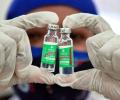
SII would be scaling up its AstraZeneca-Oxford vaccine manufacturing capacity to 200 million doses a month from 100 million a month now, reports Sohini Das.
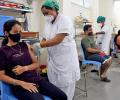
'Our study shows a greater risk reduction for people who received an mRNA vaccine after having received a first dose of a vector-based, as compared to people having received the vector-based vaccine for both doses,' Nordstrom said.
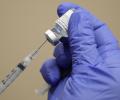
According to the study, 'mixed' schedules of these vaccines induced high concentrations of antibodies against the SARS-CoV2 spike IgG protein when doses were administered four weeks apart.

There is confusion over the United Kingdom government's vaccine recognition process for Indian travellers as even though Oxford/AstraZeneca Covishield, the India-manufactured Oxford/AstraZeneca COVID-19 vaccine, is on an updated international travel advisory, India is not yet on a list of 17 approved countries.
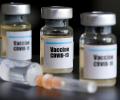
AstraZeneca Plc and the University of Oxford are facing questions about their Covid-19 vaccine and whether regulators would quickly authorise its emergency use after the pharma company acknowledged an error in the vaccine dosage received by some participants and other irregularities and omissions, according to the New York Times.

"I've just received my first Oxford/AstraZeneca vaccine dose. Thank you to all of the incredible scientists, NHS staff and volunteers who helped make this happen," he tweeted. "Getting the jab is the best thing we can do to get back to the lives we miss so much. Let's get the jab done," he added in his tweet.
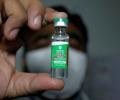
"The vaccination schedule is considered complete 28 days after the administration of a dose for Janssen vaccine and 7 days after administration of a second dose for other vaccines (Pfizer / Comirnaty, Moderna, AstraZeneca/Vaxzevria/Covishield)," the statement added.
The comments came after AstraZeneca and Oxford University acknowledged a manufacturing error that is raising questions about preliminary results of their experimental COVID-19 vaccine.
Earlier this week, AstraZeneca said it had paused the trials because of 'an unexplained illness' in a participant in the study.

Adar Poonawalla says it took a five-minute chat with his father Cyrus before making the decision to manufacture Covishield. The bet paid off, and handsomely. Serum Institute now has the capacity to make 4 billion doses of Covishield annually.

In the next two weeks, the United States will detail plans to equitably distribute about 80 million (8 crore) COVID-19 vaccine doses globally without 'political requirements' of those receiving them, Secretary of State Antony Blinken has said.
50 lakh doses of 'Covishield' vaccine earmarked by the Serum Institute for export to the United Kingdom have now been made available for the inoculation of 18-44 age group in 21 states/UTs in India, amid a surge in COVID-19 cases, official sources said.

The nature of the adverse reaction and when the development took place were not initially clear, although the participant is expected to recover, said an individual familiar with the matter.
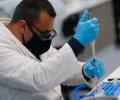
'Once DCGI will give us the permission to restart the trials in India, we will resume the trials,' Serum Institute of India (SII) said in a statement.

Of the 4.10 crore to be shared through COVAX, 1.40 crore will go to Latin America and the Caribbean nations and 1.60 crore to Asia.
The DCGI also directed Serum Institute of India to increase the safety monitoring of the subjects already vaccinated as part of the trial, and submit the plan and report.
